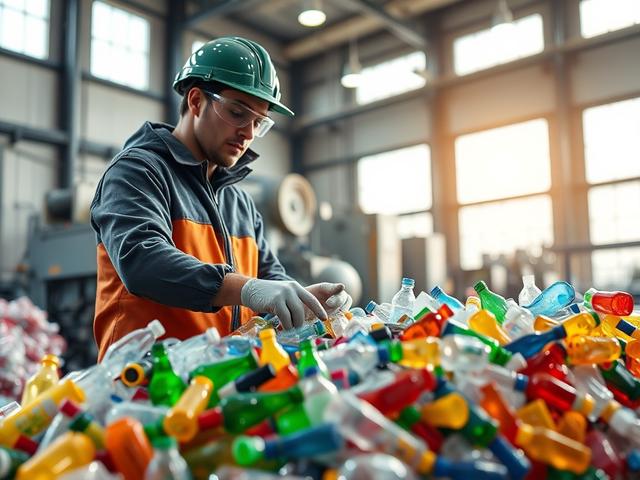
For manufacturers, plastic waste is an unavoidable part of doing business. Scrap material, off-spec production runs, and packaging waste add up quickly, and so do the costs associated with disposing of them. Partnering with a plastic recycling company gives manufacturers a practical way to cut those costs, recover value from material they'd otherwise pay to discard, and strengthen their sustainability profile at the same time.
Most manufacturers underestimate what plastic waste is actually costing them. Beyond the obvious expense of waste hauling and disposal fees, there's the cost of floor space tied up by accumulated scrap, labor hours spent sorting and managing it, and the compliance burden that comes with certain types of plastic disposal. When you add it all up, plastic waste is a much bigger line item than it appears on a standard P&L.
Disposal costs have also been trending upward. As landfill capacity tightens and regulations around industrial waste tighten with it, manufacturers who rely solely on traditional disposal are paying more every year for a problem that isn't going away. Finding an alternative that reduces or eliminates those fees is becoming less of a nice-to-have and more of a financial priority.
Working with a plastic recycling company directly reduces what manufacturers spend on waste removal. Instead of paying a hauler to take scrap plastic to a landfill, manufacturers can arrange for recyclers to collect that material, often at no cost or at a significantly reduced rate depending on the type and volume of plastic involved.
Some plastics, particularly clean industrial scrap, such as HDPE, LDPE, and polypropylene, carry enough market value that recyclers will pay for them outright. That turns a former expense into a revenue stream, which is a meaningful shift for any operation running tight margins. The key is understanding which materials you're generating and finding a recycling partner equipped to handle them.
One of the most compelling reasons manufacturers are turning to recycling partnerships is the opportunity to get paid for material they used to pay to remove. Clean, well-sorted plastic scrap has real commodity value, and recyclers who process and resell it are often willing to share that value with the businesses supplying them.
The types of scrap most likely to generate revenue include:
The payout varies based on current commodity markets, material type, and how clean and sorted the scrap is. Manufacturers who invest a small amount of effort in keeping their scrap streams separated and uncontaminated typically see the best returns.
Beyond waste disposal savings, some recycling partnerships offer manufacturers access to recycled resin as a lower-cost alternative to virgin plastic. Depending on the application and performance requirements, recycled content can be a direct substitute that reduces raw material spend without sacrificing quality.
This is particularly relevant for manufacturers facing pressure from customers or retailers to incorporate recycled content into their products. Rather than absorbing the cost of sourcing recycled resin on the open market, a strong recycling partner can help close that loop more efficiently. It's a cost reduction and a supply chain advantage wrapped into one.
Sustainability metrics are increasingly tied to business outcomes. Customers, investors, and large retail partners are asking manufacturers to demonstrate progress on waste reduction and recycled content goals, and the businesses that can show documented results are winning contracts that others aren't. A recycling partnership creates a measurable, reportable impact that supports those conversations.
Brand reputation follows operational reality. Manufacturers who can credibly point to reduced landfill diversion, lower carbon footprint, and active recycling programs are better positioned in markets where sustainability is a purchasing factor. That kind of differentiation has real financial value, even if it doesn't show up directly on a waste disposal invoice.
At Becher Plastics, we work with manufacturers to turn plastic scrap into savings. Our team handles the collection, processing, and purchasing of post-industrial plastic across a wide range of material types, and we make the process straightforward from day one. We're committed to helping manufacturers reduce disposal costs, recover revenue from scrap, and meet their sustainability goals with a partner who understands the material.
If you're ready to stop paying to get rid of plastic that has real value, reach out to our team today, and let's talk about what a recycling partnership could look like for your operation.