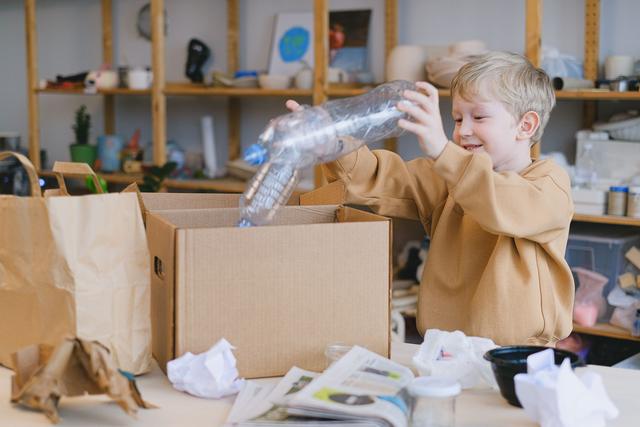
When you think about plastic recycling, you might picture a recycling bin, a sorting facility and a pile of plastic waiting for a second life. But the recycling industry is much broader than that. Behind every load of recycled material are businesses working to sort, process, buy and sell plastics so manufacturers can use them again.
Becher Plastics has been part of that work in Wisconsin for decades. Based in Menasha, the family-owned company focuses on recycled plastics, recycling services, brokerage and helping businesses understand their plastic waste.
If you are familiar with Becher Plastics, you may already know what the company does. But its history and approach have a few details worth knowing. Here are five facts taken directly from the company's website.
Becher Plastics is not new to the recycling industry. The company says it first started in the mid-1970s.
That means its experience with plastics goes back several decades. The industry has changed considerably during that time. Recycling technology, manufacturing processes, environmental expectations and the market for recycled materials have all developed.
Becher's long history is also closely tied to one value the company highlights: integrity.
On its About Us page, Becher Plastics says integrity is the core value it is most proud of. The company also makes a straightforward promise to customers: it works to meet their needs but does not promise something it cannot deliver. (Becher Plastics)
That approach matters in recycling because every business has different materials, processes and goals. A solution that works for one manufacturer does not automatically work for another.
Becher's history gives the company a long view of those challenges.
Another fact that stands out is that Becher Plastics is family-owned.
The company's roots are in Wisconsin's Fox Valley, and its physical location is at 721 Valley Road in Menasha. Becher says it serves Neenah, Menasha and surrounding communities. (Becher Plastics)
For local manufacturers, location can matter. Recycling is not simply about deciding that a material should be recycled. Businesses also need practical ways to manage materials, transportation and ongoing supply.
Becher Plastics describes its customer relationships in personal terms. Its website says the company takes pride in developing relationships with customers through face-to-face meetings and on-site analysis. (Becher Plastics)
That local connection is part of what makes the company interesting. Its work is tied to a specific manufacturing community rather than being a distant service with no understanding of local businesses.
And the family-owned structure fits with the company's emphasis on relationships, trust and integrity.
Plastic is not one single material. Different resins have different properties and uses. Becher Plastics currently lists four plastic grades it purchases in various forms: polypropylene, low-density polyethylene, linear low-density polyethylene and high-density polyethylene. (Becher Plastics)
You may recognize some of these names from everyday products.
Polypropylene, or PP, is used in a wide range of products and packaging. LDPE is commonly associated with flexible plastic products, while HDPE is used in products such as containers and other durable plastic applications. LLDPE is another form of polyethylene with its own material characteristics.
This variety is one reason recycling requires more than simply collecting plastic.
According to the U.S. Environmental Protection Agency, different plastic types have different recycling considerations, and the resin identification number on a plastic item helps identify the type of plastic used. The number does not automatically mean that the item is accepted by a particular recycling program. (US EPA)
For businesses dealing with manufacturing scrap, understanding the material is especially important. The type, form and quality of the plastic can affect how it is handled and where it can go next.
The phrase "recycling services" can make people think only about collecting discarded plastic. Becher's website shows that its work covers more ground.
The company offers recycling services, brokerage services and on-site carbon footprint analysis. Its brokerage services allow the company to buy and sell many types of plastic resins in different forms. (Becher Plastics)
The carbon footprint analysis is another interesting part of the business.
Becher says the purpose is to understand a company's unique plastic recycling needs. An on-site analysis gives the team a chance to look at how a business currently handles plastic and identify a practical approach. (Becher Plastics)
That matters because recycling works best when it fits into an actual business operation. A manufacturer has to consider what materials it produces, how those materials are stored, how they are transported and what happens to them after they leave the facility.
The U.S. EPA also emphasizes the importance of looking at the full recycling process, including collection, management and disposal. Better collection and separation can increase the value of recycled plastics. (US EPA)
For further reading, the EPA's resources on<a href="https://www.epa.gov/plastics?utm_source=chatgpt.com"> Sustainable Management of Plastics explain how plastic waste is managed and why recycling systems need effective infrastructure.
Perhaps the most interesting fact is that Becher Plastics connects its recycling work to a larger goal: helping customers reduce their carbon footprints.
The company describes itself as a manufacturer of recycled plastic and says its goal is to help customers address their plastic recycling needs. Its services include carbon footprint analysis and brokerage, alongside recycling services. (Becher Plastics)
That bigger picture is important.
Recycling turns materials that would otherwise be discarded into inputs that can be used again. The EPA explains that recycling can conserve natural resources, save energy and reduce waste and pollution. (US EPA)
But recycling also works as part of a larger manufacturing system. The better a business understands its materials and waste streams, the easier it becomes to make informed decisions about what happens to those materials next.
For more background, you can read the EPA's<a href="https://www.epa.gov/recycle/recycling-basics-and-benefits?utm_source=chatgpt.com"> Recycling Basics and Benefits for an overview of how recycling works and its environmental and economic benefits.
These five facts paint a clear picture of Becher Plastics. It is a long-established, family-owned Wisconsin company with roots in the Fox Valley. It works with multiple plastic grades, offers more than traditional recycling services and puts integrity at the center of its customer relationships.
Most importantly, the company treats recycling as part of a business's larger operation.
If your Wisconsin business generates plastic scrap or wants to better understand its current recycling process, start by looking at what materials you handle and what happens to them today. Then talk with a recycling partner that takes the time to understand your operation.
Ready to take a closer look at your recycling process? Contact Becher Plastics to discuss your materials, recycling needs or an on-site analysis.